Pharmaceutical Giant GSK’s Climate Commitment: Can It Be Fulfilled and Lead the New Industry Trend?

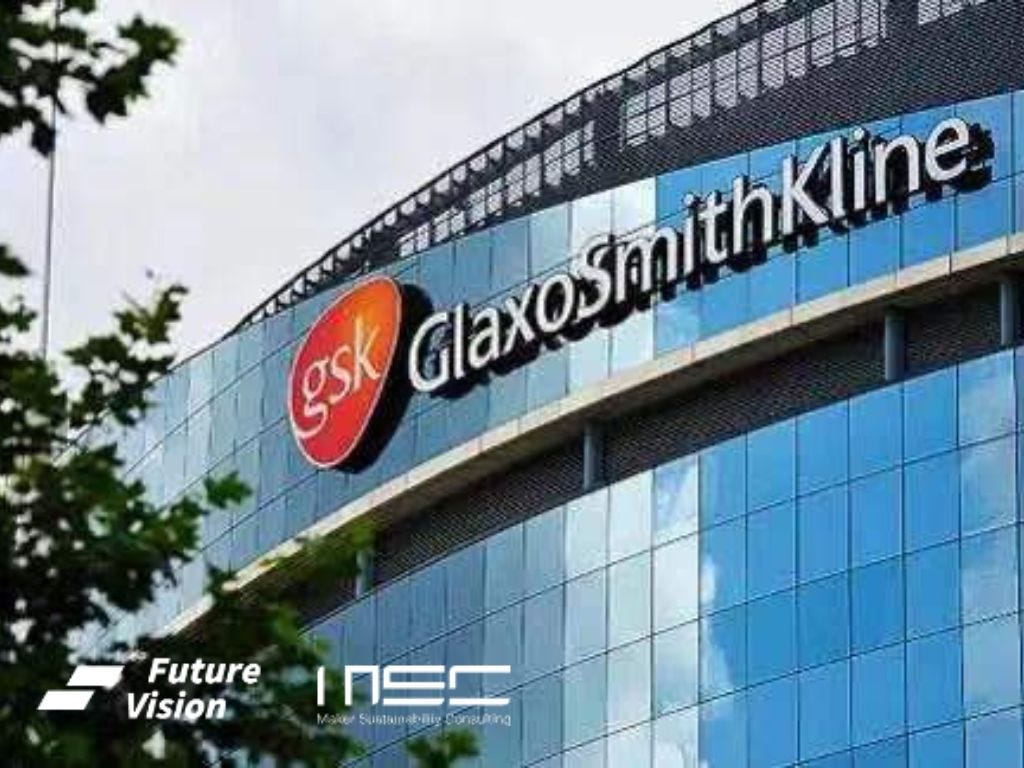
With the increasing global concern about climate change, the pharmaceutical industry is also actively responding to the ESG (Environmental, Social, and Governance) concept, striving to reduce its own carbon emissions. Recently, GSK (GlaxoSmithKline) has attracted much attention for its significant climate — related commitments. Can this British pharmaceutical giant fulfill its commitments and become an ESG benchmark in the industry? Let’s find out.
Bold Commitments, Setting a High Benchmark for the Industry
GSK has announced that by 2030, it will cut its direct and indirect greenhouse gas emissions by 80% compared to the 2020 baseline, a goal far higher than that of its competitors. At the same time, by 2030, it will offset the remaining 20% of emissions through the use of carbon credits to achieve carbon — neutrality. By 2045, it will reduce emissions by 90% from the 2020 level to achieve net — zero emissions, and this goal has been verified by the Science Based Targets initiative (SBTi).
Amy Booth, a researcher at the University of Oxford who studies the sustainability of the pharmaceutical industry, praised GSK: “They truly understand the interconnections among health, climate, and nature, and are one of the first companies to commit to increasing transparency and addressing their impact on biodiversity.” GSK is also the first company to release disclosure information in accordance with the standards of the Taskforce on Nature — related Financial Disclosures (TNFD). It performs excellently in data reporting, widely reporting emissions in scopes 1, 2, and 3, and providing detailed methodological support data.
Rapid Transformation, with Renewable Energy Taking the Lead
Although scope 1 and 2 emissions account for only a small part of GSK’s overall carbon footprint, the company has achieved remarkable emission-reduction results in this area, mainly through investing in renewable energy. GSK is increasingly purchasing electricity from renewable energy sources and replacing some on-site fossil-fuel-burning generators with wind and solar power generation systems.
For example, last year, GSK launched two wind turbines and a 56-acre solar farm at its Irvine and Scotland plants. This plant produces most of the world’s amoxicillin/clavulanic acid (Augmentin), an antibiotic that uses an energy-intensive fermentation process. With the new power generation capacity, more than half of the plant’s energy will come from on-site wind and solar power. In addition, the company has also made progress in improving the efficiency of the manufacturing process, especially in reducing gas leakage in the inhaler manufacturing process.
Product Innovation, Addressing Key Challenges
GSK is a global leader in the manufacture of drugs for asthma and other respiratory diseases, and its iconic product Ventolin has been popular since its launch in 1968. However, the propellant R-134a used in Ventolin inhalers has a greenhouse effect 1400 times that of carbon dioxide. To address this issue, GSK plans to switch to the chemical HFA 152a produced by the large-scale Mexican company Orbia. This new propellant can reduce carbon emissions by 90%.
But product replacement is not easy. The drug formula and inhaler mechanism need to be adjusted to adapt to the new propellant. At present, the revised product is undergoing phase III clinical trials, and GSK hopes to submit the results next year for regulatory approval. In addition, HFA 152a is highly flammable, and careful safety precautions are required for production. GSK has started building a new production line for the low — carbon version of Ventolin at its Évreux, France plant.
Collaborating with Suppliers to Promote the Emission-Reduction Path
Another major scope 3 challenge for GSK is to reduce the embedded emissions of the products it purchases, especially the raw materials for drugs. In 2020, these emissions accounted for 30% of the company’s emissions but have only decreased by 9% since 2020, with a long way to go to reach the 80% emission — reduction target by 2030.
In 2021, GSK, together with six other pharmaceutical companies, established the Energize organization, aiming to help suppliers reduce energy consumption. For example, in September last year, Energize facilitated an agreement among five industry suppliers and three pharmaceutical companies to purchase 560 gigawatt hours of renewable energy per year from seven new solar projects in Spain.
However, the challenge of getting suppliers to rethink their product — manufacturing methods is more difficult than expected. Many suppliers are located in countries such as China and India, where the government’s pressure on emission reduction is relatively small, and international trade tensions may further hinder cooperation. As Oxford researcher Booth said, “Large pharmaceutical companies may think they have the ability to tell suppliers what to do, but the actual situation may be the opposite.”
A Long Road Ahead: Can the Goals Be Achieved?
Currently, GSK’s emission-reduction progress is not satisfactory. By 2023, GSK’s emissions had only decreased by 12%, which is half of the speed required to reach the 2030 goal. If GSK can replace all Ventolin inhalers with new models, it will reduce 4.1 million tons of emissions, but it still needs to reduce supplier emissions and other smaller scope 3 categories by 50% to achieve the goal.

The “Path to Net — Zero” chart released by GSK earlier this year shows that emissions will decline slowly by 2026 and then decline sharply, which seems too optimistic, and the company refuses to explain the logic behind it. However, GSK officials said that initially they focused more on laying the foundation for emission reduction, and as the deadline approaches, they will pay more attention to the results that can be demonstrated.
Industry Inspiration, Building a Green Future Together
In the pharmaceutical industry, many companies have set ambitious climate goals. The recent commitments of 18 out of the top 20 listed pharmaceutical companies have been verified by SBTi, and several of them have said that they will eliminate almost all scope 1 and 2 emissions by 2030, mainly by switching to renewable energy. But a company like GSK, which has made an 80% emission — reduction commitment for scope 3, is unique in the industry. Its competitor, AstraZeneca aims to reduce emissions by 50% by 2030.
GSK’s case provides valuable experience and inspiration for the entire pharmaceutical industry. On the one hand, enterprises need to have a long-term vision and firm determination when pursuing sustainable development and be brave enough to set high goals and take active actions. On the other hand, there will be many challenges in the process of achieving the goals, and it is necessary to cooperate with suppliers, regulatory authorities, and other parties to find solutions together.
If GSK can successfully achieve its climate commitments, it will set a strong example for the pharmaceutical industry, inspire more enterprises to increase their emission-reduction efforts, and promote the entire industry to develop in a greener and more sustainable direction. Let’s wait and see whether GSK can deliver a satisfactory answer in the next five years.
It is hoped that this case sharing can enable everyone to have a deeper understanding of the ESG practices in the pharmaceutical industry. If you have any questions about the ESG field, please feel free to leave a message in the comment area or send a private message to communicate.